Integration and Improvement of A-Kano and TRIZ in the Design of Rehabilitation Aids for Stroke Patients
Keywords:
stroke rehabilitation aids; improved A-Kano model; TRIZ theoryAbstract
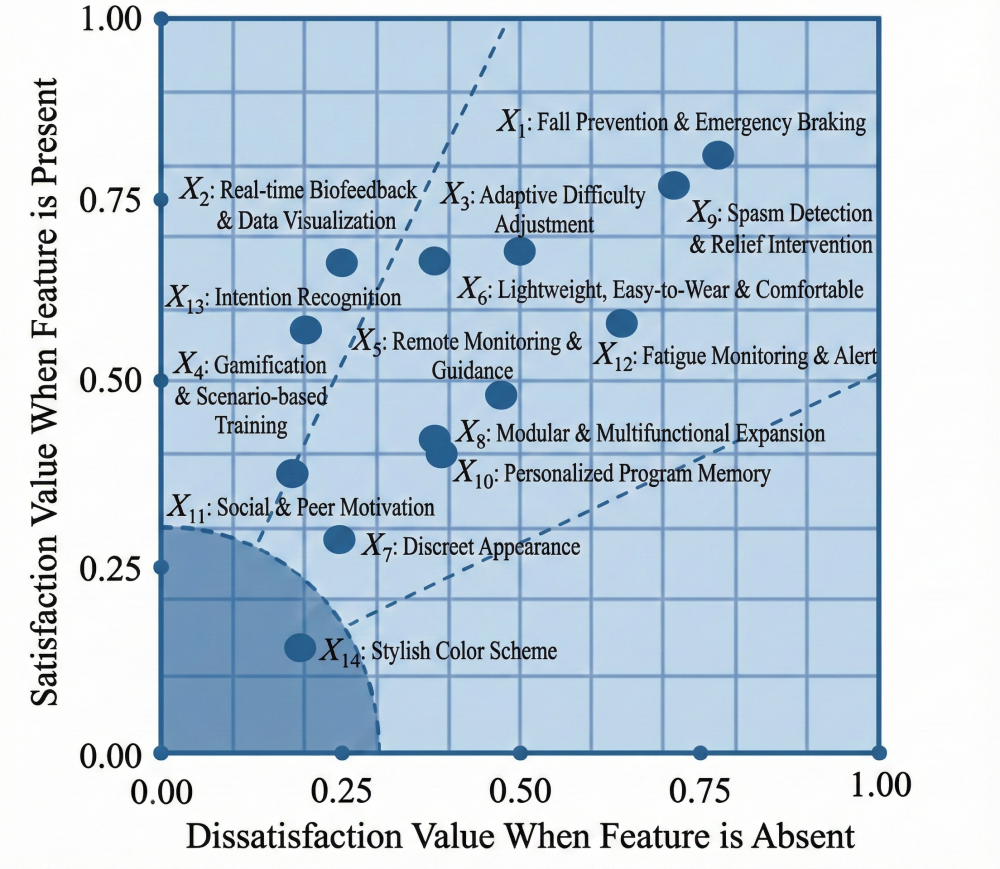
Abstract—Objective The significant study demonstrates that an important design framework could effectively bridge the gap between critical user psychology and the relevant engineering contradictions by merging the improved A-Kano model with TRIZ to mitigate chronic shortage of rehabilitation resources and the high rate of device abandonment. Methods Moreover, the improved A-Kano model might indicate that fuzzy logic allows for extraction of subtle, high-priority needs often missed by traditional linear weighting. However, psychological need for "concealed appearance" appears most notable. Thus, TRIZ theory may establish that identified needs translate into functional features without compromising performance. Given that contradiction matrix mapped physical conflicts to engineering parameters, segmentation and dynamics principles could resolve them. Results Nevertheless, methodology effectively decouples design conflicts. In light of the findings, optimized component layout may align functionality with nuanced preferences of stroke survivors. Conclusion Furthermore, the findings could provide that the important blueprint demonstrates higher-compliance rehabilitation aids. Moreover, the study might suggest that coupling quantitative need analysis with systematic innovation tools shows value in complex medical product design.