Research on Design Decision-Making and Optimization Strategies for Elderly Companion Robots Based on a Fuzzy DEMATEL-VIKOR Hybrid Model
Keywords:
Elderly Companion Robot, Fuzzy DEMATEL, VIKOR, MCDM, Emotional DesignAbstract
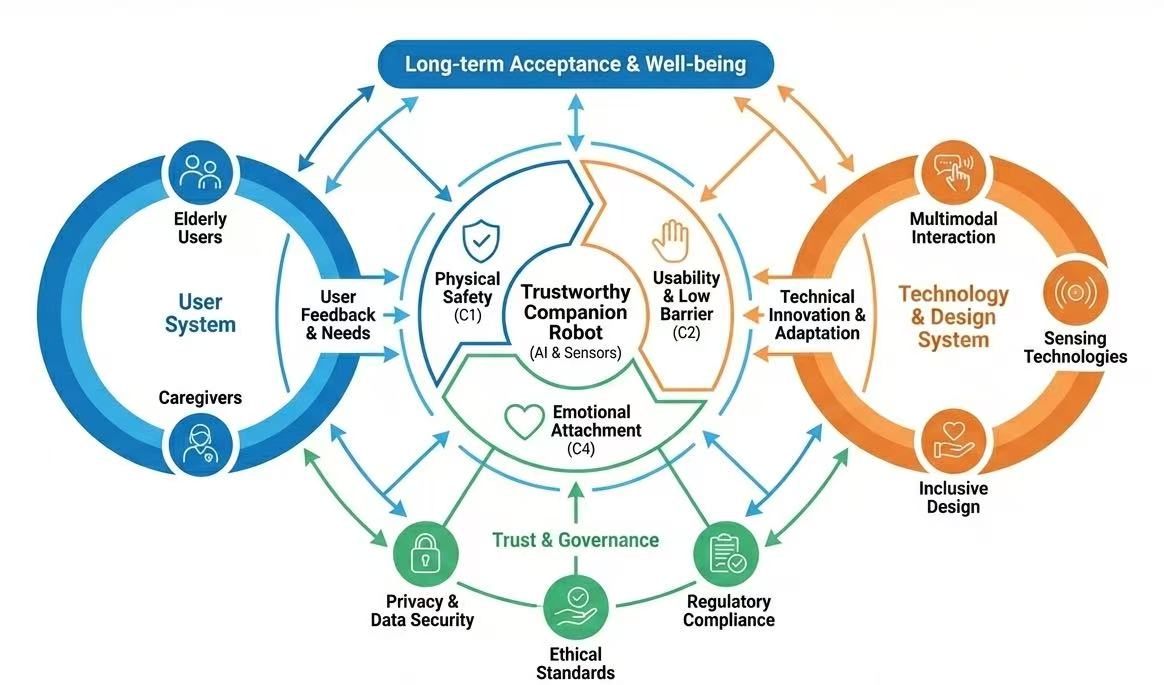
Abstract—With the acceleration of global aging, companion robots for the elderly have become an important solution for alleviating loneliness and ensuring safety. However, due to the vagueness of user needs, designers often struggle to strike a balance between "functional reliability" and "emotional interaction." This study proposes a hybrid multi-criteria decision-making (MCDM) framework combining fuzzy set theory, DEMATEL, and VIKOR to optimize design strategies. First, Fuzzy DEMATEL is employed to analyze the causal relationships among evaluation criteria. The results show that "safety and reliability" are the core driving factors, while "emotional intelligence" is the most significant outcome factor, confirming that physical safety is the prerequisite for establishing emotional trust. Subsequently, the VIKOR method is used to rank four design schemes, determining that the "hybrid balanced" scheme is the best compromise solution (), significantly superior to designs oriented toward a single function. Based on this, the study proposes the "trust pyramid" model, advocating a design strategy that combines an "invisible safety net" with "proactive multi-modal empathy." This research provides a theoretical basis for the "trust-first" design paradigm in eldercare technology.