Design of a Dynamic Pressure-Relieving Cushion for Wheelchair-Dependent Elderly Based on KANO-ANP
Keywords:
Pressure Injury Prevention;Wheelchair Cushion;KANO Model, Analytic Network Process (ANP); Sensory Compensation, Active Aging;Abstract
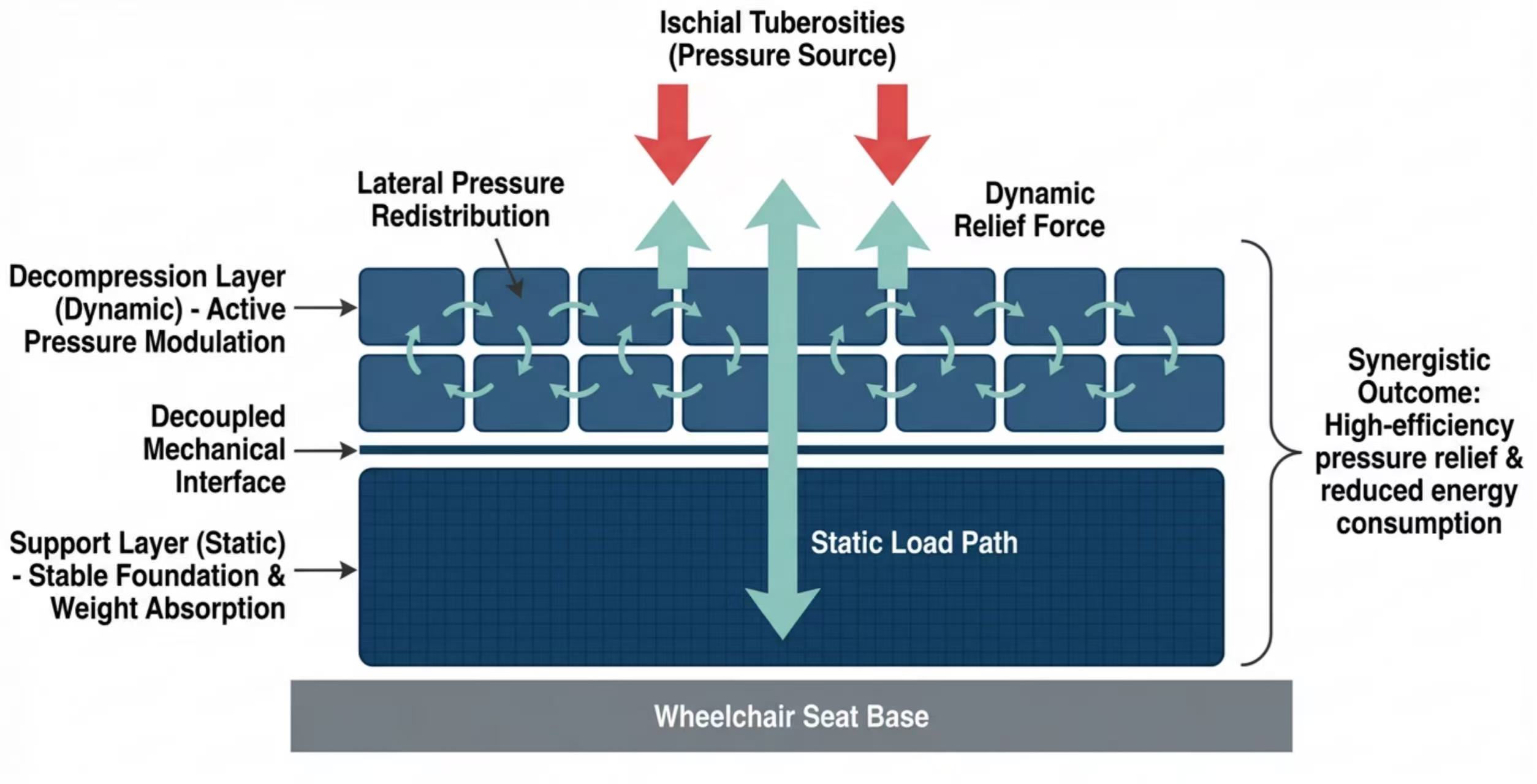
Abstract—Pressure injuries (PIs) are a life-threatening complication for wheelchair-dependent elderly, a risk exacerbated by the loss of sensory feedback. Traditional cushions, acting as passive supports, fail to address this critical perception gap. This study aims to develop an evidence-based design strategy for a dynamic cushion by integrating Sensory Compensation Theory with a quantitative decision-making framework. A hybrid KANO-ANP model was established. First, 24 initial indicators were extracted from 116 stakeholders (users, caregivers, clinicians). The KANO analysis then revealed a crucial finding: users classified core physiological functions like Shear Cancellation and Dynamic Altering as 'Indifferent' (I), demonstrating a significant gap between their perception and clinical reality. A coefficient-based rule was used to filter out low-impact features while retaining these clinically vital "latent needs." Subsequently, a 7-member expert panel, including WOCN nurses, used the Analytic Network Process (ANP) to evaluate the interdependencies and assign priorities to the refined indicators. The ANP model forcefully corrected the user's perceptual bias. The expert evaluation assigned the highest weights to Shear Cancellation and Dynamic Altering , confirming their non-negotiable importance. Furthermore, Sensory Compensation emerged as the second most important dimension , with indicators like Vibration Alert (S1) ranking high, validating the need for sensory empowerment.Based on these findings, a novel three-pronged design strategy is proposed: a Dual-Layer Decoupled structure to neutralize physical forces, a Multimodal Warning system to compensate for lost sensation, and an Active Airflow system for microclimate control. This study provides a scientific paradigm for transforming assistive devices from passive supports into active, sensory-enabled health management systems that bridge the gap between clinical necessity and user awareness.